Two men who were originally charged with murder in a deadly Savannah, Georgia, shooting have avoided the possibility of spending the rest of their lives in prison after accepting separate plea deals. Marion Hutchinson, 44, and Charles Anthony Barnes, 45, pleaded guilty to reduced charges in the September 2025 death of 26-year-old Frederick Hampton Jr., who was killed during their exchange of gunfire.
The shooting happened on September 20, 2025, in the 1200 block of Rogers Street. What began as a confrontation linked to an old dispute ended with Hampton dead, even though he was not the person at the center of the disagreement. His mother later told the court that her son had been trying to bring peace when the gunfire broke out.
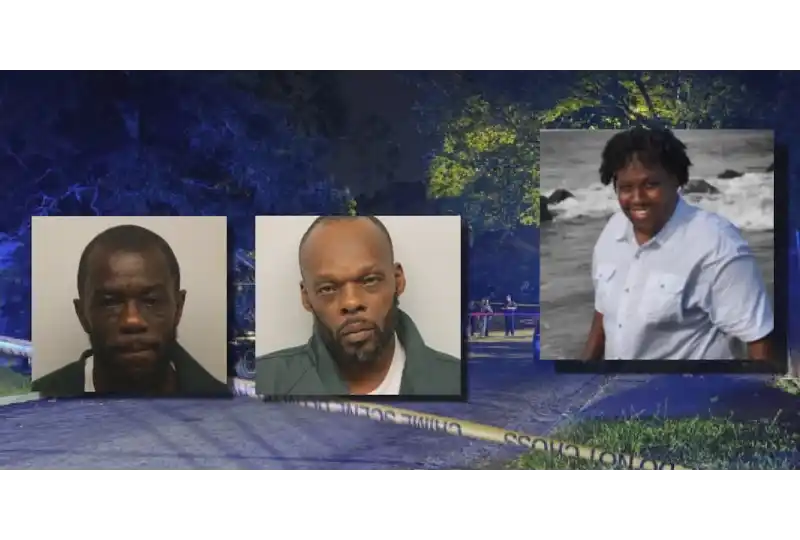
The two defendants received different sentences after entering separate plea agreements. Hutchinson pleaded guilty to involuntary manslaughter under an open-ended, partially negotiated agreement. He received seven years in prison, with credit for time served. His original charges included party to a crime of malice murder, felony murder and firearm offenses. The agreement also dropped an aggravated assault charge and three firearm-possession counts.
The consequences could have been much worse for Hutchinson if the case had gone to trial. Prosecutors said a conviction on his original charges could have resulted in two life sentences plus another 40 years. His plea agreement significantly reduced that possible punishment.
Barnes also avoided the original murder charges. He entered a non-negotiated guilty plea to involuntary manslaughter and possession of a firearm during the commission of a felony. He was sentenced to six years in prison and five years of probation, with credit for just over a year already served. His original malice murder, felony murder, aggravated assault and other firearm charges were dropped.
During the court proceedings, prosecutors explained how a dispute that had lasted for years allegedly led to the deadly encounter. Barnes’ brother had previously been convicted of aggravated assault for shooting Hutchinson. Ten days before Hampton’s death, Hutchinson had also been charged with aggravated assault in a separate incident involving the brother. Prosecutors said Hutchinson and the brother later communicated through a third party and agreed to leave their differences behind.
That understanding did not last. On the night of the shooting, Hutchinson was at a Chatham County gathering place known as a shot house. He had been drinking and planned to meet friends at a local bar or pool hall for a game of pool. According to the prosecutor, Barnes approached him outside with a firearm and made a remark about nobody running up on his brother.
The prosecutor said Barnes pointed his gun at Hutchinson and fired. Hutchinson tried to escape but was struck in the lower leg. He then took cover, pulled out his own firearm and fired three shots at Barnes. Hampton was also outside when the shooting began. He was hit during the exchange and died.
Investigators reportedly found two unspent shell casings that had been cleared from Barnes’ gun after it jammed. Hutchinson later met with prosecutors, his attorney and the detective assigned to the case. The prosecutor said the detective believed his account was truthful after reviewing witness statements, photographs and forensic evidence.
One important question during the hearing was which weapon fired the bullet that killed Hampton. When the judge raised the issue, the prosecutor said the state believed the fatal shot came from Hutchinson’s gun. The prosecution’s account was that Hutchinson had been shot first and returned fire, unintentionally killing Hampton.
Barnes disputed parts of that account. During his sentencing hearing, he told the judge that he and Hutchinson had been arguing for years and claimed Hutchinson had shot his brothers in previous incidents. He said the confrontation on Rogers Street began with an exchange of insults and that no physical fight took place before the guns came out.
Barnes claimed Hutchinson reached for his weapon first, forcing him to reach for his own gun. He admitted firing once but insisted he fired into the ground rather than directly at Hutchinson. He also said he never saw Hampton during the shooting and only learned about his death afterward.
Barnes apologized to Hampton’s family in court, saying he never intended for the situation to end with someone losing their life. He repeatedly denied that his bullet killed Hampton and told the judge he accepted responsibility for his actions but did not consider himself a murderer.
The judge was not pleased with the decision to bring guns into the dispute. He questioned why the two men had been standing in the middle of the street with firearms instead of finding another way to settle their differences. He also told Barnes that his quick temper was something he needed to control.
Hampton’s mother gave the court another side of the case, one that went beyond the argument and gunfire. She described her son as a devoted family member and a father who loved his child. Frederick became a father in 2020, and his mother said he embraced the responsibility and made his son a priority.
But the family had already experienced a terrible loss before his death. Hampton’s son died in a drowning accident more than a year earlier. His mother said Frederick was still dealing with that grief and was only beginning to recover when he was killed.
She told the judge that her son had a friendly nature, never met a stranger and could leave people smiling. On the night of the shooting, she said, he was trying to calm the situation rather than make it worse.
“That was the kind of person he was. He did not deserve to lose his life for trying to bring peace to a situation,” she told the court.
His mother asked for the maximum sentence allowed by law, explaining that the family wanted the seriousness of his death to be recognized. She said no sentence could repair the damage or give them back the son, brother and father they had lost. She also spoke about the future Frederick would never get to experience, including watching his family grow and celebrating the milestones that should have been ahead of him.
Barnes’ six-year prison sentence also carries strict restrictions. He is prohibited from contacting Hampton’s family, possessing or being around firearms, and using alcohol or drugs. He cannot visit places that serve or provide them or enter homes where they are present. He is also banned from West Savannah and must obtain lawful employment.
Hutchinson received seven years, while Barnes received six years in prison followed by five years of probation. Both men reportedly tried to cooperate with investigators, but their separate plea agreements brought the criminal case to a close without a trial on the original murder charges.
For Hampton’s family, the court proceedings were another painful reminder of what happened on Rogers Street. The two men will serve their sentences, but the 26-year-old caught in the middle of their dispute will never return home.